

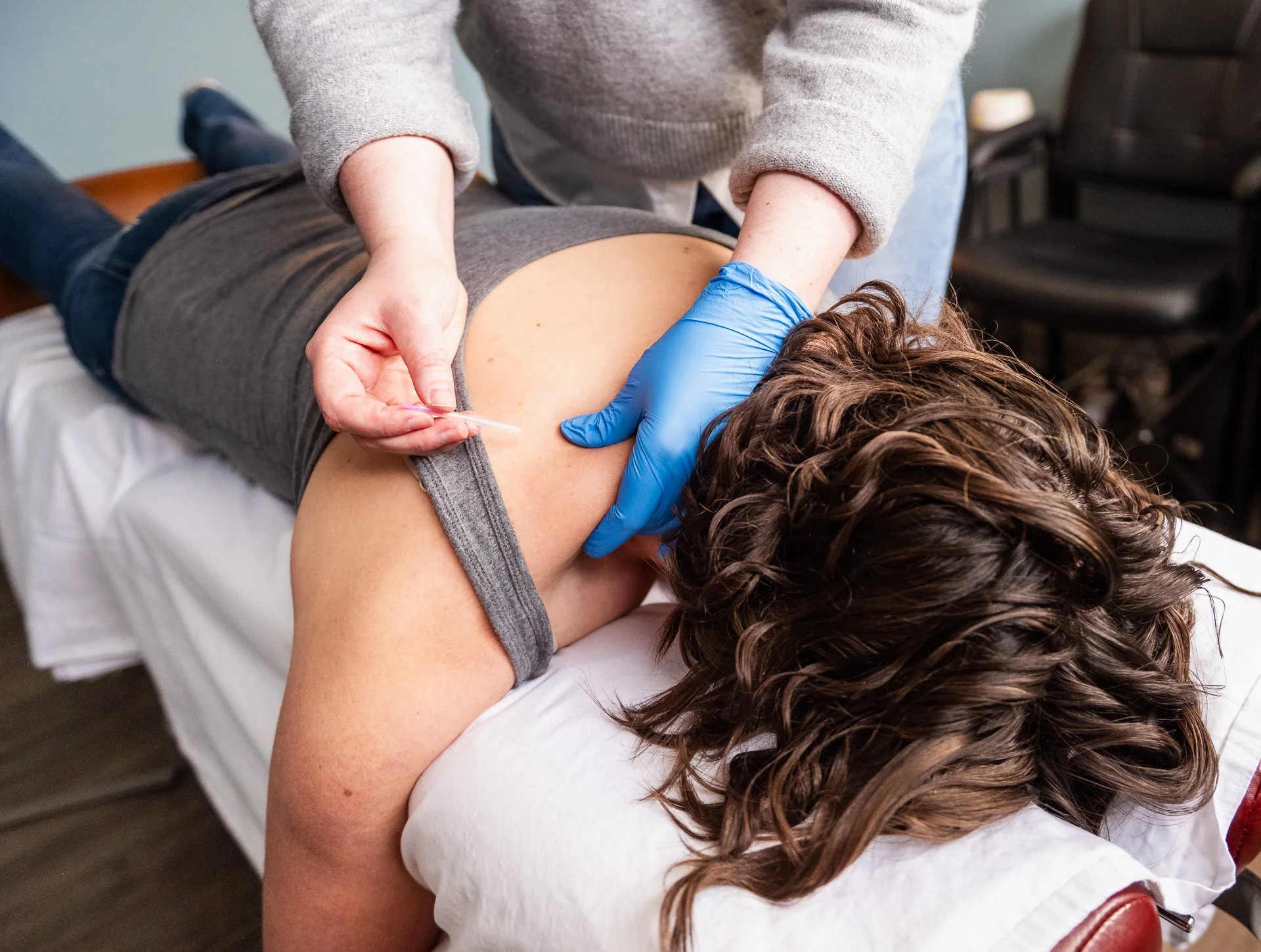
Dry Needling
at Backsmith Montana Chiropractic.
Dry needling is a targeted treatment technique used to address muscle pain, tension, and movement-related discomfort. At Backsmith Montana Chiropractic, dry needling may be used on its own or alongside chiropractic care and manual therapy to help you move more comfortably and get back to doing what you enjoy.
What Is Dry Needling?
Dry needling uses very thin needles to help with areas that feel tight, tender, or just don't seem to let go.
When the needle enters the tissue, it creates a tiny, controlled stimulus. Your body responds by increasing activity in the area involved in repair and recovery. Dry needling can also affect blood flow and how your nervous system responds to pain and sensitivity.
In simpler terms, we're giving a stubborn area a small nudge to help change what's happening locally and how your nervous system is responding to it.
Many people also notice that they feel surprisingly relaxed after dry needling. There's a nervous system component to treatment, so the effects aren't necessarily limited to the exact spot being needled.
We typically use dry needling as one tool in your treatment plan. The goal isn't just to make a tight spot feel better for a few hours. It's to create an opportunity for you to move more comfortably and help us work on why that area may have become irritated in the first place.
Want to nerd out a little? Read more about the science behind dry needling here.
When Might Dry Needling Be Helpful?
Muscle Pain & Trigger Points
Those stubborn, tender areas that don't seem to settle down with stretching, massage, or rest. Dry needling may help reduce muscle-related pain and sensitivity, particularly in the short term.
Foot & Heel Pain
Dry needling may be considered for certain types of plantar heel pain, particularly when muscular tenderness is contributing to discomfort.
Neck & Shoulder Tension
Long hours at a computer, repetitive work, and physical activity can contribute to neck and shoulder discomfort. Dry needling may offer short-term relief when muscular pain is part of the problem.
Certain Types of Headaches
When headaches are associated with tender muscles around the neck and shoulders, dry needling may help reduce headache-related discomfort or disability in some patients.
Low Back Pain
When muscle tenderness contributes to an achy or uncomfortable low back, dry needling may help decrease symptoms and make everyday movement or exercise more comfortable.
Pain That Limits Movement
Sometimes the benefit isn't simply reducing pain. It's making it easier to walk, exercise, work, or return to activities that matter to you.
Why We Use Dry Needling
Dry needling can be especially useful for chronic muscular tension, tenderness, and areas that seem to stay irritated over time. It’s not something we use automatically just because an area hurts, but when muscle sensitivity seems to be part of the picture, it can be a helpful way to calm things down and make movement feel easier. Dry needling also tends to work best when paired with regular movement and exercise, whether that’s something you already do on your own or part of care you’re getting elsewhere.
-
Dry needling and acupuncture both use thin, solid needles, but they differ in their treatment approaches and clinical applications. Dry needling at Backsmith is used within a musculoskeletal approach to address muscle pain, sensitivity, and movement-related complaints.
-
Sensations vary. Some patients feel very little during treatment, while others experience a brief pinch, dull ache, or muscle twitch. Temporary soreness afterward is possible. Your comfort and response are considered throughout treatment.
-
No! Dry needling can be provided as a standalone treatment or combined with chiropractic care when appropriate. Your treatment is guided by your symptoms, goals, and preferences.
-
You may experience some temporary muscle soreness following dry needling, similar to how you might feel after a deep tissue massage or a really good workout. Some people feel relief shortly after treatment, while others notice improvement as the soreness settles.
We recommend allowing yourself at least an hour after your appointment to rest or take it easy. Avoid strenuous exercise or physically demanding activities during that time, and let your body respond to treatment before jumping back into your usual routine.
-
Dry needling isn't appropriate for everyone. Certain medical conditions may increase the risk of complications or require additional precautions.
Please let us know before your appointment if any of the following apply to you:
Pregnancy: We require clearance from your OB or primary care provider before proceeding with dry needling.
Bleeding disorders or blood-thinning medications: These may increase the risk of bleeding or bruising and require additional precautions or medical clearance.
Active infection or skin irritation: Needling should be avoided in areas with infection, open wounds, burns, or irritated skin.
Lymphedema or previous lymph node removal: Additional precautions may be necessary when treating an affected limb.
Recent surgery or implanted medical devices: Treatment may need to be modified or postponed depending on the procedure, implant, and treatment location.
Certain medical conditions: A compromised immune system, reduced sensation, active cancer treatment, artificial heart valves, or a history of bacterial endocarditis may require additional screening or medical clearance.
Your safety comes first. Having one of these conditions doesn't automatically mean dry needling is off the table. We'll discuss your individual circumstances and determine whether treatment is appropriate, whether modifications are needed, or whether another approach would be a better fit.
-
Dry needling is generally considered safe when performed by a trained clinician, but any procedure involving needles carries some risk.
In a study of approximately 20,500 dry needling treatments, minor side effects occurred in about 37% of sessions, while major adverse events were reported in less than 0.1%. Minor effects may include temporary soreness, bruising, or mild bleeding. Rare but more serious complications, such as infection, nerve injury, or puncture of a lung, are also possible.
At Backsmith, we use sterile, single-use needles and take time to review your medical history, discuss potential risks, and walk you through what to expect. You'll have the opportunity to ask questions and review our consent form before treatment begins.
Your comfort matters, too. If you have a fear or aversion to needles, dry needling may not be the right choice for you, and that's completely okay! We have other treatment options available and will never pressure you into a treatment you're uncomfortable with.
Dry Needling FAQs
Ready to See if Dry Needling Is Right For You?
Contact Backsmith Montana Chiropractic to take the first step toward care.